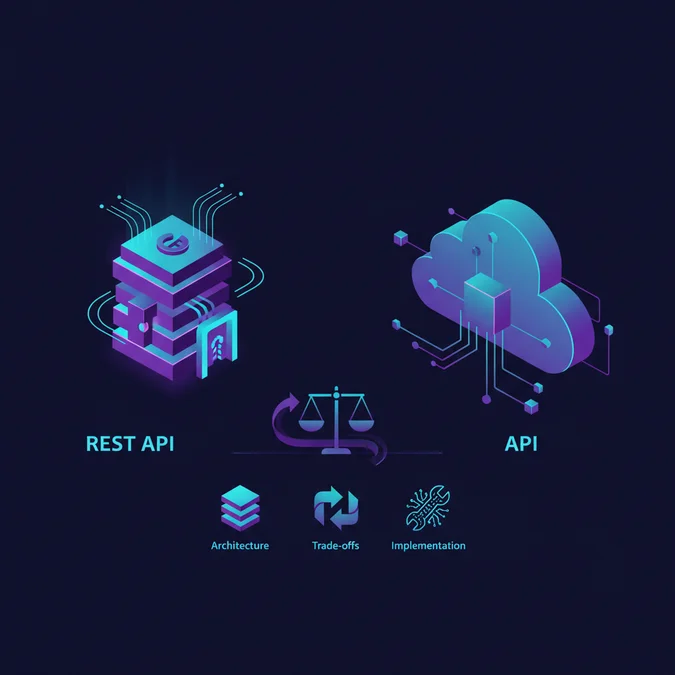

Creating an API involves designing a structured interface that allows different software systems to communicate and exchange data efficiently. This process encompasses defining endpoints, specifying data formats, implementing business logic, and securing interactions. A well-designed API is crucial for building scalable, interconnected applications, enabling seamless integration across various platforms and services.
This guide provides a practitioner’s roadmap to API creation, covering fundamental concepts, architectural considerations, and practical development steps. We will explore essential design principles, compare prominent architectural styles like REST, GraphQL, and gRPC, and demonstrate core implementation techniques with actionable code examples. Our aim is to equip you with the knowledge to build robust, secure, and maintainable APIs from the ground up.
Understanding APIs: Fundamentals and Use Cases
An Application Programming Interface (API) acts as a set of defined rules and protocols that enable different software applications to communicate with each other. It abstracts the underlying complexity of a system, exposing only the necessary functionalities for external interaction. This client-server communication model is fundamental to modern distributed systems.
Core API Concepts
- Endpoints: Specific URLs where API resources can be accessed. For example,
/usersor/products/{id}. - Methods: HTTP verbs (GET, POST, PUT, DELETE) indicating the action to be performed on a resource.
- Requests: Messages sent from the client to the server, often containing parameters, headers, and a body.
- Responses: Messages sent from the server to the client, typically including a status code, headers, and a data payload (e.g., JSON, XML).
- Data Formats: JSON (JavaScript Object Notation) is the most prevalent format for data exchange due to its lightweight nature and human readability. XML is also used, though less frequently in new APIs.
APIs are the backbone of countless digital services, from mobile applications fetching data to microservices communicating within a complex enterprise architecture. They facilitate data synchronization, enable third-party integrations, and power modular software development.
Common API Use Cases
- Web and Mobile Applications: Frontend clients use APIs to fetch, send, and update data with backend services.
- Third-Party Integrations: Services like payment gateways (Stripe, PayPal) or social media platforms (Twitter, Facebook) expose APIs for developers to integrate their functionalities.
- Microservices Architecture: Internal APIs allow independent services within a larger system to communicate, promoting modularity and scalability.
- Internet of Things (IoT): Devices use APIs to send sensor data to cloud platforms and receive commands.
- Data Analytics: APIs provide programmatic access to data for analysis, reporting, and machine learning pipelines.
The API Creation Process: Planning Your Architecture and Resources
Effective API creation begins long before any code is written. A meticulous planning phase ensures the API meets its intended purpose, remains scalable, and is intuitive for developers to consume. This involves defining the API’s scope, identifying its resources, and outlining its interaction patterns.
API Planning Checklist
- Define API Purpose and Scope: Clearly articulate what problems your API solves and for whom. What core functionalities will it expose? What data will it manage?
- Identify Core Resources: Determine the key entities your API will expose. For an e-commerce API, these might be
products,orders,customers. - Design Resource Endpoints: Map resources to logical URLs. For example,
/productsfor a collection of products, and/products/{id}for a specific product. - Specify Data Models: Define the structure of data for each resource, including data types, validation rules, and relationships between resources. Consider both request and response payloads.
- Choose an Architectural Style: Select between REST, GraphQL, gRPC, or other styles based on your project’s requirements for flexibility, performance, and data fetching.
- Consider Authentication and Authorization: Plan how users or applications will securely access your API and what permissions they will have.
- Error Handling Strategy: Define consistent error response formats and status codes to guide consumers when issues arise.
- Versioning Strategy: Decide how you will manage changes to your API over time (e.g., URI versioning, header versioning).
- Documentation Plan: Determine how you will document your API (e.g., OpenAPI/Swagger) to make it easy for developers to understand and use.
- Scalability and Performance: Consider potential traffic loads and how your architecture will scale, including caching strategies, load balancing, and database optimization.
This structured approach to API creation minimizes rework and ensures that the resulting interface is robust, developer-friendly, and aligned with business objectives. Skipping this crucial planning can lead to an inefficient, difficult-to-maintain, and poorly adopted API.
Architectural Choices: Comparing REST, GraphQL, and gRPC Trade-offs
Selecting the right architectural style is a pivotal decision in API creation, directly impacting performance, flexibility, and developer experience. The three most prevalent styles are REST (Representational State Transfer), GraphQL, and gRPC.
REST (Representational State Transfer)
REST is an architectural style, not a protocol, that leverages standard HTTP methods to interact with resources. It emphasizes statelessness, uniform interfaces, and cacheability. REST APIs are widely adopted due to their simplicity and direct mapping to HTTP.
- Advantages: Simple to understand and implement, leverages existing HTTP infrastructure, widely supported by tools and libraries, excellent for resource-oriented services.
- Disadvantages: Can lead to over-fetching or under-fetching of data, multiple round-trips for complex data graphs, less efficient for mobile clients with limited bandwidth.
GraphQL
GraphQL is a query language for APIs and a runtime for fulfilling those queries with your existing data. It allows clients to request exactly the data they need, reducing over-fetching and multiple requests.
- Advantages: Efficient data fetching (clients specify exact data), single endpoint for all queries, strong typing for schema validation, real-time subscriptions.
- Disadvantages: Steeper learning curve, requires a GraphQL server, can be more complex to implement caching, potential for complex queries to impact server performance.
gRPC (Google Remote Procedure Call)
gRPC is a high-performance, open-source universal RPC framework developed by Google. It uses Protocol Buffers for data serialization and HTTP/2 for transport, enabling efficient, bidirectional streaming and low-latency communication.
- Advantages: Extremely high performance and efficiency (HTTP/2, Protocol Buffers), strong type checking, built-in code generation for multiple languages, ideal for microservices.
- Disadvantages: Less human-readable (binary format), browser support requires a proxy, steeper learning curve for new developers.
Architectural Trade-offs: The choice between REST, GraphQL, and gRPC hinges on specific project requirements. REST excels in simplicity for resource-centric operations. GraphQL provides flexibility for complex data requirements and mobile clients. gRPC delivers unparalleled performance for internal microservice communication and high-throughput scenarios. There is no single ‘best’ choice, only the most appropriate for a given context.
| Feature | REST | GraphQL | gRPC |
|---|---|---|---|
| Data Fetching | Fixed endpoints, potential over/under-fetching | Client-defined queries, precise fetching | RPC calls with defined messages |
| Transport Protocol | HTTP/1.1 (primarily) | HTTP/1.1 or HTTP/2 | HTTP/2 |
| Data Format | JSON, XML | JSON (typically) | Protocol Buffers (binary) |
| Performance | Good | Good, efficient for complex queries | Excellent (low latency, high throughput) |
| Complexity | Low to moderate | Moderate to high | Moderate to high |
| Use Case | Public APIs, resource-oriented | Mobile apps, complex data graphs | Microservices, high-performance systems |
Building Your API: Step-by-Step Development and Code Examples
Once the architectural decisions are made, the practical steps for how to create API functionality begin. This involves setting up your development environment, defining routes, handling requests, and interacting with a database. We’ll illustrate with language-agnostic steps and then provide specific code examples.
General Development Steps
- Set Up Project Structure: Initialize your project, install necessary dependencies (frameworks, libraries, database drivers).
- Define Data Models: Create classes or schemas that represent your resources and how they map to your database tables or collections.
- Configure Database Connection: Establish a connection to your chosen database (e.g., PostgreSQL, MongoDB).
- Create API Endpoints (Routes): Define the URLs and HTTP methods for accessing your resources.
- Implement Request Handlers: Write functions that process incoming requests, interact with your data models and database, and return appropriate responses.
- Handle Input Validation: Ensure incoming data conforms to expected formats and constraints to prevent errors and security vulnerabilities.
- Implement Authentication/Authorization: Integrate security measures to protect your endpoints.
- Implement Error Handling: Provide consistent and informative error messages for various failure scenarios.
Code Implementation Examples
Let’s look at simplified examples using Python with Flask and Node.js with Express.js to demonstrate how to create api endpoints for a basic ‘items’ resource.
Python with Flask Example
First, install Flask: pip install Flask
from flask import Flask, jsonify, request

app = Flask(__name__)

# In-memory database for demonstration
items = [
    {"id": 1, "name": "Laptop", "price": 1200},
    {"id": 2, "name": "Mouse", "price": 25}
]

# GET all items
@app.route('/api/items', methods=['GET'])
def get_items():
    return jsonify(items)

# GET a single item by ID
@app.route('/api/items/<int:item_id>', methods=['GET'])
def get_item(item_id):
    item = next((item for item in items if item['id'] == item_id), None)
    if item:
        return jsonify(item)
    return jsonify({"message": "Item not found"}), 404

# POST a new item
@app.route('/api/items', methods=['POST'])
def add_item():
    new_item = request.get_json()
    if not new_item or 'name' not in new_item or 'price' not in new_item:
        return jsonify({"message": "Invalid item data"}), 400
    new_item['id'] = len(items) + 1
    items.append(new_item)
    return jsonify(new_item), 201

# PUT (update) an item
@app.route('/api/items/<int:item_id>', methods=['PUT'])
def update_item(item_id):
    item_data = request.get_json()
    item = next((item for item in items if item['id'] == item_id), None)
    if not item:
        return jsonify({"message": "Item not found"}), 404
    item.update(item_data)
    return jsonify(item)

# DELETE an item
@app.route('/api/items/<int:item_id>', methods=['DELETE'])
def delete_item(item_id):
    global items
    initial_len = len(items)
    items = [item for item in items if item['id'] != item_id]
    if len(items) < initial_len:
        return jsonify({"message": "Item deleted"}), 204
    return jsonify({"message": "Item not found"}), 404

if __name__ == '__main__':
    app.run(debug=True)
Node.js with Express.js Example
First, initialize project and install Express: npm init -y then npm install express
const express = require('express');
const app = express();
const PORT = 3000;

app.use(express.json()); // Middleware to parse JSON request bodies

// In-memory database for demonstration
let items = [
    { id: 1, name: 'Laptop', price: 1200 },
    { id: 2, name: 'Mouse', price: 25 }
];

// GET all items
app.get('/api/items', (req, res) => {
    res.json(items);
});

// GET a single item by ID
app.get('/api/items/:id', (req, res) => {
    const itemId = parseInt(req.params.id);
    const item = items.find(item => item.id === itemId);
    if (item) {
        res.json(item);
    } else {
        res.status(404).json({ message: 'Item not found' });
    }
});

// POST a new item
app.post('/api/items', (req, res) => {
    const newItem = req.body;
    if (!newItem || !newItem.name || !newItem.price) {
        return res.status(400).json({ message: 'Invalid item data' });
    }
    newItem.id = items.length ? Math.max(...items.map(item => item.id)) + 1 : 1;
    items.push(newItem);
    res.status(201).json(newItem);
});

// PUT (update) an item
app.put('/api/items/:id', (req, res) => {
    const itemId = parseInt(req.params.id);
    const itemIndex = items.findIndex(item => item.id === itemId);
    if (itemIndex > -1) {
        items[itemIndex] = { ...items[itemIndex]...req.body, id: itemId };
        res.json(items[itemIndex]);
    } else {
        res.status(404).json({ message: 'Item not found' });
    }
});

// DELETE an item
app.delete('/api/items/:id', (req, res) => {
    const itemId = parseInt(req.params.id);
    const initialLength = items.length;
    items = items.filter(item => item.id !== itemId);
    if (items.length < initialLength) {
        res.status(204).send(); // No content for successful deletion
    } else {
        res.status(404).json({ message: 'Item not found' });
    }
});

app.listen(PORT, () => {
    console.log(`Server running on http://localhost:${PORT}`);
});
These examples provide a foundational understanding of how to structure basic CRUD (Create, Read, Update, Delete) operations within an API using popular frameworks. Real-world APIs would involve more complex data models, database interactions, and robust error handling.
Implementing API Security and Best Practices
Security is paramount in API creation. A compromised API can lead to data breaches, service disruptions, and reputational damage. Implementing robust security measures and adhering to best practices are non-negotiable for any production-ready API.
Key Security Measures
- Authentication: Verifying the identity of the client or user.
- API Keys: Simple, but less secure; often used for public APIs or rate limiting.
- OAuth2: Industry-standard for delegated authorization; allows third-party applications to access user data without exposing credentials.
- JWT (JSON Web Tokens): Compact, URL-safe means of representing claims between two parties. Often used for session management and stateless authentication.
- Authorization: Determining what an authenticated client or user is permitted to do. This involves role-based access control (RBAC) or attribute-based access control (ABAC).
- Input Validation: Sanitize and validate all incoming data to prevent injection attacks (SQL injection, XSS) and ensure data integrity.
- Rate Limiting: Restricting the number of requests a client can make within a given timeframe to prevent abuse, brute-force attacks, and ensure fair usage.
- Encryption (HTTPS/TLS): Always use HTTPS to encrypt data in transit, protecting against eavesdropping and man-in-the-middle attacks.
- Error Handling: Avoid verbose error messages that expose sensitive system information. Provide generic, informative error codes.
- Logging and Monitoring: Implement comprehensive logging of API requests and responses, and monitor for unusual activity that might indicate a security incident.
- CORS (Cross-Origin Resource Sharing): Properly configure CORS headers to control which domains can access your API, mitigating cross-site scripting risks.
OWASP API Security Top 10: Referencing the OWASP API Security Top 10 provides a critical baseline for identifying and mitigating common API vulnerabilities. These include Broken Object Level Authorization, Broken User Authentication, Excessive Data Exposure, and Lack of Resources & Rate Limiting. Regularly auditing your API against these risks is crucial.
General API Design Best Practices
- Consistency: Maintain consistent naming conventions, URL structures, and data formats across your API.
- Statelessness: Design your API to be stateless, meaning each request from a client to server contains all the information needed to understand the request.
- Version Control: Implement a clear versioning strategy (e.g.,
/v1/users) to manage changes without breaking existing client applications. - Idempotency: Design PUT and DELETE operations to be idempotent, meaning making the same request multiple times has the same effect as making it once.
- Use Standard HTTP Status Codes: Return appropriate HTTP status codes (e.g., 200 OK, 201 Created, 204 No Content, 400 Bad Request, 401 Unauthorized, 403 Forbidden, 404 Not Found, 500 Internal Server Error).
- Pagination and Filtering: For collections of resources, provide mechanisms for pagination (e.g.,
?page=1&limit=10) and filtering (e.g.,?status=active) to manage large datasets.
Testing, Documenting, and Deploying Your API
After development, an API is not ready for production until it has been thoroughly tested, clearly documented, and properly deployed. These stages ensure reliability, usability, and availability.
API Testing Strategies
Comprehensive testing is vital to ensure your API functions as expected, handles edge cases gracefully, and remains secure.
- Unit Tests: Test individual components (functions, methods) in isolation to verify their correctness.
- Integration Tests: Verify the interaction between different components or services (e.g., API endpoint interacting with a database).
- End-to-End (E2E) Tests: Simulate real user scenarios, testing the entire flow from client request to server response and back.
- Performance Tests: Assess the API’s responsiveness, stability, and scalability under various load conditions (e.g., load testing, stress testing).
- Security Tests: Conduct penetration testing, vulnerability scanning, and compliance checks to identify and remediate security flaws.
API Documentation
Good documentation is crucial for developer adoption and ease of use. It acts as the contract between your API and its consumers.
- OpenAPI Specification (Swagger): A widely adopted, language-agnostic standard for describing RESTful APIs. It allows both humans and machines to discover and understand the capabilities of a service without access to source code. Tools can generate interactive documentation, client SDKs, and server stubs from an OpenAPI definition.
- ReadMe Files: Provide a high-level overview, installation instructions, and quick-start guides.
- Code Examples: Include clear, runnable code snippets for common use cases in multiple languages.
- Error Codes: Document all possible error responses and their meanings.
| Documentation Tool/Standard | Description | Benefits |
|---|---|---|
| OpenAPI/Swagger | Standard, language-agnostic interface description for REST APIs. | Automated documentation, client/server code generation, interactive UI (Swagger UI). |
| Postman Collections | Organized requests and examples for Postman client. | Easy sharing, testing, and collaboration for API consumers. |
| Markdown/Sphinx | General documentation generators. | Flexible for conceptual guides, tutorials, and extended explanations. |
API Deployment and Management
Deploying your API involves making it accessible to clients, typically on a server or cloud platform. Effective management ensures its ongoing health and performance.
- Hosting Environment: Choose a suitable environment like a dedicated server, a Virtual Private Server (VPS), containerization platforms (Docker, Kubernetes), or serverless functions (AWS Lambda, Azure Functions, Google Cloud Functions).
- API Gateways: Tools like AWS API Gateway, Azure API Management, or Kong provide a single entry point for all API calls. They offer functionalities such as authentication, authorization, rate limiting, caching, routing, and monitoring.
- CI/CD Pipelines: Implement Continuous Integration/Continuous Deployment to automate testing and deployment processes, ensuring rapid and reliable updates.
- Monitoring and Alerting: Set up tools to track API performance (latency, error rates, throughput), resource utilization, and security events. Configure alerts for critical issues.
- Scalability: Design your deployment to handle varying loads, utilizing load balancing, auto-scaling groups, and efficient database solutions.
Frequently Asked Questions
What is the easiest way to create an API for beginners?
For beginners, using a framework like Flask (Python) or Express.js (Node.js) simplifies API creation significantly. These frameworks abstract away much of the complexity, allowing you to quickly define routes, handle requests, and return data with minimal boilerplate code, making the learning curve gentler.
What are the essential components required for API creation?
Essential components for API creation include a server to host your API, a database for data storage, an API framework or library (e.g., Flask, Express), defined endpoints (URLs) for specific actions, request/response handlers, and often authentication/authorization mechanisms to secure access.
How long does it typically take to create an API?
The time to create an API varies widely based on complexity. A simple API with a few endpoints might take a few hours or days. A robust, secure, and scalable API with extensive features, integrations, and thorough testing could take weeks or months, especially for larger projects.
What programming languages are best suited for API creation?
Popular programming languages for API creation include Python (with frameworks like Flask, Django), Node.js (with Express.js), Java (with Spring Boot), Ruby (with Ruby on Rails), and Go. The ‘best’ choice often depends on project requirements, team expertise, and ecosystem preferences, as each offers unique advantages.
Creating an API is a multi-faceted process demanding careful planning, robust implementation, and diligent maintenance. By understanding the fundamentals, making informed architectural choices, prioritizing security, and embracing rigorous testing and documentation, you can build APIs that are not only functional but also scalable, secure, and a pleasure for developers to consume.
The journey from concept to a production-ready API involves continuous learning and adaptation. Leverage the tools and best practices outlined in this guide to design and develop interfaces that drive innovation and connectivity across your software ecosystem. Start building your next generation of robust APIs today.
NR Studio builds custom web apps, mobile apps, SaaS platforms, and internal tools for growing businesses. If you’re working through a technical decision, feel free to reach out — no commitment required.