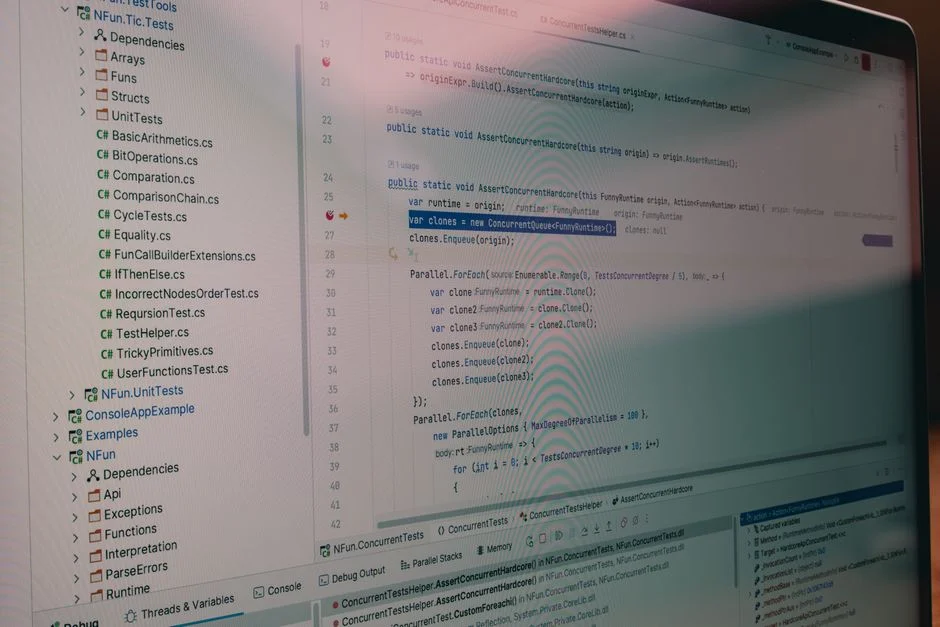

The GitHub Student Developer Pack is a curated bundle of enterprise-tier software tools, cloud credits, and developer infrastructure granted free of charge to verified students. It provides hands-on access to production environments, developer platforms, continuous integration pipelines, and domain registrars without incurring initial operational overhead.
With GitHub Education’s recent updates incorporating continuous automated re-verification through academic single sign-on alongside modern student verification engines, access controls have shifted significantly. The pack now bridges the gap between sandboxed academic exercises and real production environments by integrating tools like JetBrains IDEs, DigitalOcean compute droplets, Namecheap domains, Datadog monitoring, and GitHub Copilot access directly into your developer identity.
For software engineering students and aspiring backend engineers, navigating this resource footprint requires understanding vendor selections, infrastructure trade-offs, and migration paths. Evaluating these components allows developers to structure real architectures, maintain sustainable deployments, and avoid costly vendor lock-in as projects scale beyond university tenure.
Core Platform Capabilities and Available Infrastructure
The GitHub Student Developer Pack combines foundational computing resources, modern integrated development environments (IDEs), cloud hosting, continuous delivery tooling, and identity security services. Accessing this ecosystem gives individual developers access to enterprise infrastructure that would normally require substantial annual software budgets.
A primary benefit of the pack is the variety of available tools. Instead of relying on toy environments, developers can experiment with the exact software suites that production teams run. Below is an architectural overview of how these distinct service layers assemble into a unified deployment topology:
+-----------------------------------------------------------------------+
| DNS & Edge Layer |
| Namecheap / Name.com Domains + Cloudflare CDN Routing |
+-----------------------------------------------------------------------+
 |
 v
+-----------------------------------------------------------------------+
| Compute & Ingress |
| DigitalOcean Droplets / Microsoft Azure Linux Instances |
+-----------------------------------------------------------------------+
 | |
 v v
+-----------------------------------+ +-------------------------+
| Backend Application | | Managed Data Stores |
| PHP 8.3 / Laravel 11 / NGINX FPM | <-----> | PostgreSQL / Redis DB |
+-----------------------------------+ +-------------------------+
 | |
 +----------------------+----------------------+
 |
 v
+-----------------------------------------------------------------------+
| Observability & Operations |
| Datadog APM Tracing + Sentry Application Monitoring |
+-----------------------------------------------------------------------+
Leveraging these capabilities during application development lets students structure realistic deployment targets early. Teams can design distributed architectures, evaluate database connection pooling, and inspect network latency rather than confining execution to local SQLite databases and local development servers.
Verification Mechanics and Academic Identity Architecture
Accessing the GitHub Student Developer Pack requires passing through GitHub Education’s strict verification boundary. Historically, a basic university .edu address was sufficient. Today, the platform uses location-aware multi-factor validation, optical character recognition (OCR) of enrollment documentation, and federated institutional Single Sign-On (SSO).
Verification Requirements and Evidence Standards
GitHub uses several criteria to confirm academic enrollment:
- Institutional Email Association: A school-issued email must be attached and verified on your primary GitHub account.
- Geolocation Verification: Verification sessions require active browser geolocation querying to ensure physical proximity to the designated campus network, mitigating automated proxy registrations.
- Dated Proof of Enrollment: Accepted documents include current student identification cards with visible expiration dates, official enrollment verification letters, or dated registration fee receipts.
Understanding these constraints prevents common provisioning delays. If an institution does not issue academic email domains, manual ticket escalation requiring registrar-certified enrollment letters becomes mandatory.
Tool Selection and Vendor Evaluation Matrix
The developer pack provides several overlapping tools across cloud computing, database management, and domain routing. Choosing the right vendor at the start of a project avoids painful re-platforming later on. For instance, developers building modular systems must balance raw infrastructure control against managed convenience.
When establishing your engineering stack, consider evaluating the bundled providers against key production trade-offs:
| Category | Pack Provider | Commercial Alternative | Trade-off and Considerations |
|---|---|---|---|
| Cloud Hosting | DigitalOcean ($200 credit) | AWS EC2 / GCP | DigitalOcean offers straightforward provisioning and predictable cost models, while AWS provides higher initial configuration complexity. |
| IDE Ecosystem | JetBrains All Products Pack | VS Code Extensions | JetBrains offers deep static analysis and memory profiling out-of-the-box, whereas VS Code requires custom manual extension setups. |
| Error Tracking | Sentry (50,000 events/mo) | Datadog Log Engine | Sentry offers dedicated stack-trace inspection and fast local integration; Datadog focuses on end-to-end metrics and network tracing. |
| Email Ingress | SendGrid (15,000 emails/mo) | Postmark / Mailgun | SendGrid delivers reliable free-tier transactional volume, though domain reputation configuration requires strict DKIM and SPF controls. |
Selecting the right platform early minimizes operational debt. For example, pairing an automated IDE with specialized application monitoring ensures that code quality issues are identified before staging deployments occur.
Configuring Cloud Compute and Ingress for Laravel Applications
A common operational objective is deploying real applications to the cloud credits provided by the pack. Using DigitalOcean credits alongside modern PHP frameworks allows developers to step beyond local mock servers and configure true Linux-based staging instances.
When configuring environments for modern PHP software development, setting up automated provisioning scripts on Ubuntu LTS nodes establishes clean environments. The script below handles configuring PHP 8.3, Composer, and the necessary process supervisors for a robust deployment:
#!/usr/bin/env bash
# Infrastructure bootstrap script for Ubuntu 22.04 / 24.04 LTS
set -euo pipefail

export DEBIAN_FRONTEND=noninteractive

# Update upstream repository pointers
apt-get update && apt-get upgrade -y

# Install core operating dependencies
apt-get install -y software-properties-common curl git unzip nginx

# Add Ondrej Surý PPA for current PHP builds
add-apt-repository -y ppa:ondrej/php
apt-get update

# Install PHP 8.3 FPM and performance extensions
apt-get install -y \
 php8.3-fpm \
 php8.3-cli \
 php8.3-mbstring \
 php8.3-xml \
 php8.3-curl \
 php8.3-pgsql \
 php8.3-redis \
 php8.3-intl \
 php8.3-zip

# Verify PHP-FPM active process status
systemctl enable php8.3-fpm
systemctl start php8.3-fpm

# Global Composer installation
curl -sS https://getcomposer.org/installer | php -- --install-dir=/usr/local/bin --filename=composer

# Verify installations
php -v
composer --version
nginx -v
Executing standardized shell automation guarantees your environments remain consistent across rebuilds. This pattern avoids undocumented manual modifications and prepares you for writing automated deployment scripts later in your engineering career.
Automating Test Pipelines with GitHub Actions and Sentry
The GitHub Student Developer Pack unlocks GitHub Pro features, giving you increased GitHub Actions runner minutes for private repositories. Modern engineering workflows depend heavily on continuous integration pipelines to catch regressions, enforce static analysis, and run automated suites prior to production deployments.
To ensure high architectural standards, engineering teams run automated tests on every pull request. Reviewing unit testing best practices highlights how automated test runners reveal regressions early. Below is an enterprise-grade GitHub Actions continuous integration workflow configured for a modern backend system:
name: Continuous Integration Pipeline

on:
 push:
 branches: [ main, develop ]
 pull_request:
 branches: [ main ]

jobs:
 run-verification:
 name: Execute Tests and Static Analysis
 runs-on: ubuntu-latest

 services:
 postgres-service:
 image: postgres:16-alpine
 env:
 POSTGRES_DB: testing_db
 POSTGRES_USER: runner
 POSTGRES_PASSWORD: secret_password
 ports:
 - 5432:5432
 options: >-
 --health-cmd pg_isready
 --health-interval 10s
 --health-timeout 5s
 --health-retries 5

 steps:
 - name: Check out source tree
 uses: actions/checkout@v4

 - name: Setup PHP Environment
 uses: shivammathur/setup-php@v2
 with:
 php-version: '8.3'
 extensions: mbstring, pdo_pgsql, zip
 coverage: xdebug

 - name: Install Composer Dependencies
 run: composer install --prefer-dist --no-interaction --no-progress --no-suggest

 - name: Execute Database Migrations
 env:
 DB_CONNECTION: pgsql
 DB_HOST: 127.0.0.1
 DB_PORT: 5432
 DB_DATABASE: testing_db
 DB_USERNAME: runner
 DB_PASSWORD: secret_password
 run: php artisan migrate --force

 - name: Run Test Suite
 run:/vendor/bin/phpunit --testdox
Running tests on real ephemeral PostgreSQL services rather than in-memory SQLite instances mirrors production behavior and catches database engine incompatibilities early.
Domain Registration, SSL Ingress, and Security Configurations
A critical learning curve for student developers is bridging raw public compute instances with valid domain names and secure transport layer security (TLS) termination. The GitHub Student Developer Pack provides complimentary domain names through registrars like Namecheap and Name.com, enabling full domain configuration.
Hardening Ingress with Reverse Proxy Topology
Pointing an A record directly to a compute instance works, but placing an edge routing layer or an NGINX reverse proxy in front provides TLS offloading and security isolation. The following configuration establishes an automated Let’s Encrypt TLS setup via an NGINX configuration block:
server {
 listen 80;
 listen [:]:80;
 server_name staging.example-student.dev;

 # Enforce HTTPS redirect
 return 301 https://$host$request_uri;
}

server {
 listen 443 ssl http2;
 listen [:]:443 ssl http2;
 server_name staging.example-student.dev;

 root /var/www/application/public;
 index index.php index.html;

 # Cryptographic hardening
 ssl_protocols TLSv1.2 TLSv1.3;
 ssl_ciphers HIGH:aNULL:MD5;
 ssl_certificate /etc/letsencrypt/live/example-student.dev/fullchain.pem;
 ssl_certificate_key /etc/letsencrypt/live/example-student.dev/privkey.pem;

 # Security response headers
 add_header X-Frame-Options "SAMEORIGIN" always;
 add_header X-Content-Type-Options "nosniff" always;
 add_header Referrer-Policy "no-referrer-when-downgrade" always;

 location / {
 try_files $uri $uri/ /index.php?$query_string;
 }

 location ~ \.php$ {
 include snippets/fastcgi-php.conf;
 fastcgi_pass unix:/var/run/php/php8.3-fpm.sock;
 fastcgi_param SCRIPT_FILENAME $realpath_root$fastcgi_script_name;
 include fastcgi_params;
 }

 location ~ /\.(?well-known).* {
 deny all;
 }
}
Implementing explicit HTTPS redirection alongside isolated FastCGI process endpoints reflects modern hosting practices and protects backend services from common edge security flaws.
Enterprise Integration: Data Ingestion and Processing Architecture
Beyond basic web applications, production systems routinely process batch files, structured reports, and bulk datasets. Leveraging compute power alongside database engines included in student packages allows engineers to design resilient data ingestion pipelines.
Systems that process complex datasets require optimized memory footprints. When building tools that parse structured reports, studying techniques for importing and exporting spreadsheet data illustrates how cursor pagination and chunking maintain memory stability. Below is a queued batch processor using chunked reading semantics to ingest records without memory exhaustion:
<php

declare(strict_types=1);

namespace App\Jobs;

use App\Models\MetricRecord;
use Illuminate\Bus\Queueable;
use Illuminate\Contracts\Queue\ShouldQueue;
use Illuminate\Foundation\Bus\Dispatchable;
use Illuminate\Queue\InteractsWithQueue;
use Illuminate\Queue\SerializesModels;
use Illuminate\Support\LazyCollection;

final class IngestTelemetryDatasetJob implements ShouldQueue
{
 use Dispatchable, InteractsWithQueue, Queueable, SerializesModels;

 public function __construct(
 private readonly string $filePath
 ) {}

 public function handle(): void
 {
 // Open high-performance read stream with defensive resource guards
 if (!file_exists($this->filePath) ||!is_readable($this->filePath)) {
 throw new \InvalidArgumentException("Target dataset file missing: {$this->filePath}");
 }

 // Stream parsing via LazyCollection prevents RAM spikes
 LazyCollection:make(function () {
 $handle = fopen($this->filePath, 'rb');
 try {
 while (($line = fgetcsv($handle, 4096))!== false) {
 yield $line;
 }
 } finally {
 fclose($handle);
 }
 })
 ->skip(1) // Bypass CSV header row
 ->chunk(500) // Process in chunks to reduce database round trips
 ->each(function ($chunk): void {
 $records = [];
 foreach ($chunk as $row) {
 $records[] = [
 'source_uuid' => $row[0],
 'event_type' => $row[1],
 'payload' => $row[2],
 'created_at' => now(),
 'updated_at' => now(),
 ];
 }
 MetricRecord:insert($records); // Atomic batch insertion
 });
 }
}
Techniques such as generator-backed file iteration and grouped array insertions protect server resources. Writing software to run under real memory constraints is a foundational skill for high-throughput enterprise systems.
Total Cost of Ownership, Commercial Equivalents, and Pricing Realities
While the GitHub Student Developer Pack is advertised as free, developers must calculate the actual monetary value and ongoing commercial costs when credits expire. Understanding commercial hosting tiers, tooling renewals, and professional software subscriptions ensures developers avoid billing surprises as projects mature.
Commercial Cost Breakdown Table
The following table outlines the true annual cost of the primary tools included in the student pack if purchased directly at retail pricing:
| Vendor / Service | Tier Included in Pack | Standard Monthly Rate | True Annual Value |
|---|---|---|---|
| GitHub Pro | Full Pro Account Access | $4.00 / month | $48.00 |
| JetBrains | All Products Pack Subscription | $28.90 / month | $289.00 (Year 1) |
| DigitalOcean | $200 Cloud Credit (1 Year) | ~ $16.60 / month | $200.00 |
| Namecheap | 1 Free.me Domain + SSL | ~ $1.50 / month | $18.00 |
| Datadog | Pro Tier Monitoring License | $15.00 / host / month | $180.00 |
| Sentry | Developer Team Allowance | $26.00 / month | $312.00 |
| GitKraken Client | Pro Client License | $4.95 / month | $59.40 |
| Frontend Masters | 6 Months Access | $39.00 / month | $234.00 |
| Aggregate Platform Total | Comprehensive Stack | ~ $113.95 / month | $1,340.40 |
Evaluating this cost breakdown clarifies that students gain access to over $1,300 in annual developer tooling. However, development teams must treat these resources as temporary subsidies. If a project expands beyond personal experiments into commercial use, the underlying operational costs will quickly return to standard market rates.
Common Operational Mistakes and Account Suspension Triggers
A common pitfall with academic developer accounts is triggering automated fraud checks or failing renewal validations. GitHub systems continuously scan for patterns that suggest account sharing, secondary commercial exploitation, or unauthorized proxy usage.
Primary Factors Causing Revocation
- Using Non-Campus IP Addresses During Initial Verification: Attempting identity verification while connected through commercial VPNs, hosting node proxies, or non-residential exit gateways often causes automatic rejections.
- Reselling or Transferring Cloud Credit Codes: Commercial cloud platforms like DigitalOcean, Azure, and Heroku flag accounts that apply promotional codes sourced from disconnected GitHub identities.
- Running Unauthorized High-Compute Workloads: Using compute credits for cryptomining, network port scanning, or high-bandwidth proxying violates acceptable use policies and leads to immediate account suspensions across both the cloud provider and GitHub.
- Ignoring Domain Expiration Transitions: Free domains provided for the first year through Namecheap or Name.com will automatically renew at standard commercial rates ($15.00 to $45.00 depending on top-level domain rules) unless auto-renew is explicitly configured or canceled.
Adhering to platform terms of service preserves your academic privileges and keeps your deployment infrastructure accessible throughout your studies.
Migration Path: Offboarding and Transitioning to Production Infrastructure
The conclusion of academic enrollment requires transitioning from subsidized educational accounts to self-funded infrastructure. Projects that lack an explicit migration plan risk service interruptions when promotional allowances expire.
As products scale and operational requirements expand, teams often choose to collaborate with professional software engineering providers to transition from prototypes to high-availability environments. A production migration follows a clear, stepwise path:
- Audit Infrastructure Dependencies: Identify all active external resources, third-party authentication tokens, and promotional database clusters tied to educational accounts.
- Decouple Primary Domain Name Records: Move domain names to independent organization-owned registrars (such as Cloudflare Registrar or AWS Route 53) to prevent accidental loss during student email deactivations.
- Migrate Persistent Data Stores: Take transactional database snapshots, export object storage buckets, and restore them directly onto dedicated staging instances within your permanent cloud accounts.
- Update Continuous Integration Secrets: Transition code repositories from student accounts to GitHub Organizations with unified team billing, updating all secrets and continuous integration variables accordingly.
Executing these steps systematically ensures zero downtime, eliminates reliance on academic email addresses, and delivers a clean handoff to stable, self-sustaining production hosting.
Explore the Fundamentals of Backend Architecture
Mastering cloud orchestration, continuous integration automation, and clean application design is a continuous journey. Structuring maintainable software begins with solid fundamentals.
Explore our complete Laravel, Basics directory for more guides.
Factors That Affect Development Cost
- Annual license renewals following graduation
- Standard cloud hosting droplets and compute sizing
- Domain registration renewal pricing after year one
- Application monitoring and telemetry ingestion volume
While student access provides over $1,300 in annual developer tooling for free, operating the equivalent infrastructure commercially costs between $60 and $200 per month depending on compute and telemetry scale.
The GitHub Student Developer Pack provides engineers with an accessible entry point to modern development tools, continuous integration runners, and production cloud infrastructure. By replacing local mock setups with real deployment pipelines, students can master essential practices like zero-downtime deployments, distributed database connectivity, and automated testing.
Treat the pack as a launching pad for your infrastructure expertise. Build resilient services, configure automated continuous deployment workflows, manage memory footprints carefully, and establish clear migration strategies early. Structuring applications with these fundamentals ensures your projects continue running smoothly long after your academic credits conclude.