
The InterSystems Developer Community is the central technical ecosystem, knowledge repository, and code-sharing hub supporting engineers working with InterSystems IRIS, Caché, Ensemble, and HealthShare. It provides vetted code packages via Open Exchange, technical troubleshooting forums, architectural articles, and direct access to product specialists. For technology leaders, it functions as a primary lever to reduce operational risk and technical debt across mission-critical healthcare, financial, and logistics data platforms.
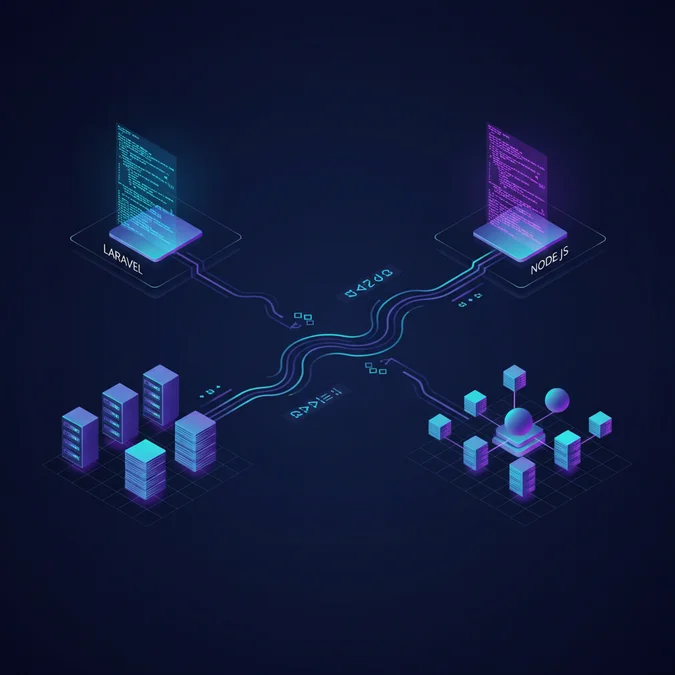
Enterprise platforms built on multi-model database engines face distinct architectural bottlenecks, proprietary language constraints, and steep learning curves. When legacy MUMPS or ObjectScript systems interface with modern frameworks such as Laravel, Python microservices, or cloud-native message brokers, engineering leaders encounter friction around talent acquisition and systems integration. The developer community serves as an institutional bridge between legacy multi-dimensional data stores and modern distributed application stacks.
Evaluating this ecosystem from a Chief Technology Officer perspective requires examining hard financial trade-offs, developer onboarding curves, migration paths, and integration patterns. This analysis breaks down the developer community, the underlying IRIS data platform, interoperability patterns with frameworks like Laravel, observability tooling, and the total cost of ownership associated with InterSystems infrastructure.
Understanding the InterSystems Developer Ecosystem
The InterSystems developer community operates as an integrated portal combining peer-to-peer technical forums, an open-source application directory called Open Exchange, continuous learning modules, and global technical competitions. Unlike standard language communities hosted diffusely across Reddit or Stack Overflow, InterSystems concentrates its technical discourse within a vendor-curated yet developer-driven portal. This concentration ensures that discussions around specialized topics like ObjectScript internals, Global data structures, and FHIR integration engines maintain high signal-to-noise ratios.
From an executive vantage point, the health of this ecosystem directly dictates software delivery velocity and hiring risk. When an enterprise licenses InterSystems IRIS or maintains legacy Caché environments, standard public search indexes often yield minimal actionable insights for esoteric engine faults. The official community hub mitigates this scarcity by indexing decades of institutional knowledge, algorithmic patterns, and production-tested utility packages.
Core Components of the Community Infrastructure
- Technical Articles and Tutorials: In-depth architectural write-ups authored by enterprise architects, certified partners, and core InterSystems engine developers.
- Open Exchange: A curated directory of software packages, drivers, Docker compose templates, and application connectors distributed under permissive open-source licenses.
- Developer Competitions: Regular community hackathons centered on interoperability, artificial intelligence, FHIR standards, and developer productivity tools that continuously expand the ecosystem’s open code footprint.
- Global Masters Program: A gamified contribution framework that incentivizes veteran systems engineers to answer technical queries, review architecture proposals, and author educational modules.
For organizations evaluating their vendor partnerships, looking through a reputable list of software development agencies can highlight whether specialized systems integrators maintain active standing and verifiable code contributions within this ecosystem.
The Core Technology Stack: InterSystems IRIS, Caché, and ObjectScript
To comprehend community interactions, engineering leadership must evaluate the foundational technologies that power the platform. InterSystems IRIS represents the modern evolution of the company’s data platform, unifying multi-model persistence, interoperability messaging, and real-time analytical capabilities within a unified operational runtime. Underneath modern abstraction layers lies the Global: a sparse, multidimensional array persisted directly to disk without the overhead of relational serialization.
ObjectScript is the primary procedural and object-oriented runtime language executing directly inside the database engine. Because ObjectScript executes within the engine’s memory space, it bypasses the network serialization round-trips typical of client-server application tiers. However, this native execution model couples business logic tightly with data storage mechanics, presenting distinct technical debt challenges if not governed by rigorous architectural patterns.
Multi-Model Data Representation Mechanics
The core engine stores information natively as Globals, denoted syntactically with a caret symbol. A single multidimensional Global array can be projected simultaneously as relational SQL tables, JSON documents, or discrete object hierarchies:
// Setting a multi-dimensional global node directly in InterSystems ObjectScript
Set ^PatientRecord(10042, "Demographics") = $ListBuild("Jane Doe", "1984-11-23", "Female")
Set ^PatientRecord(10042, "Vitals", 1) = $ListBuild("Systolic", 120, 80, "mmHg", $Horolog)

// Relational SQL projection reads the exact same disk block without data duplication
// SELECT Name, BirthDate FROM Schema.PatientRecord WHERE ID = 10042
This multi-model architecture delivers exceptional transactional throughput for write-heavy workloads, such as electronic health record updates or real-time securities order processing. The engineering trade-off centers on talent specialization: finding senior developers fluent in hierarchical data design and ObjectScript macros is significantly more difficult than sourcing engineers familiar with standard relational or document databases.
Architectural Patterns for Modern Application Integration
Enterprise engineering teams rarely deploy InterSystems IRIS in complete isolation. Modern application architectures require bridging the high-performance IRIS transactional core with flexible web frameworks, cloud-native API gateways, and microservice ecosystems. Organizations running Laravel, Python, or Go application layers can integrate with InterSystems through several decoupled architectural patterns.
The three dominant integration topologies are REST/JSON API exposure, native database connectivity via relational drivers, and enterprise message broker pipelines. Each topology trades operational latency against architectural coupling.
Integration Topology Comparison
| Integration Pattern | Typical Latency | Coupling Level | Operational Complexity | Primary Use Case |
|---|---|---|---|---|
| Direct Relational (ODBC/JDBC) | Low (1ms to 5ms) | High | Moderate | Batch synchronization and legacy report extraction |
| Native REST Gateway | Moderate (5ms to 20ms) | Low | Low | Microservice communication, modern web interfaces |
| Enterprise Service Bus / FHIR | Moderate (10ms to 40ms) | Very Low | High | Healthcare protocol compliance, multi-vendor orchestration |
| Kafka / Event Streaming | Very Low (Async <5ms) | Decoupled | High | Real-time event notification, CQRS read models |
When bridging legacy systems to web applications, building an asynchronous messaging layer or implementing clean REST interfaces prevents web workers from locking database threads during sustained query execution. The community provides extensive open-source boilerplates for configuring these integration layers efficiently.
Bridging InterSystems IRIS with Modern Web Frameworks
Integrating InterSystems IRIS with modern web frameworks such as Laravel enables engineering teams to build reactive, developer-friendly front-end applications while keeping mission-critical transactional records inside IRIS. A common production pattern utilizes Laravel’s database abstraction layer or HTTP client to interface directly with an IRIS backend. For relational queries, developers can utilize unixODBC alongside PHP PDO drivers configured specifically for InterSystems.
Below is a production-grade example of a Laravel service class connecting to an InterSystems IRIS REST endpoint to retrieve patient records, incorporating strict validation, timeout policies, and error handling mechanics:
<php

namespace App\Services\InterSystems;

use Illuminate\Support\Facades\Http;
use Illuminate\Http\Client\ConnectionException;
use Illuminate\Support\Facades\Log;
use RuntimeException;

class IrisDataGateway
{
 private string $baseUrl;
 private string $apiToken;
 private int $timeoutSeconds;

 public function __construct(string $baseUrl, string $apiToken, int $timeoutSeconds = 5)
 {
 $this->baseUrl = rtrim($baseUrl, '/');
 $this->apiToken = $apiToken;
 $this->timeoutSeconds = $timeoutSeconds;
 }

 public function fetchPatientRecord(int $patientId): array
 {
 $endpoint = "{$this->baseUrl}/api/v1/patients/{$patientId}";

 try {
 $response = Http:withToken($this->apiToken)
 ->timeout($this->timeoutSeconds)
 ->withHeaders([
 'Accept' => 'application/json',
 'X-Request-Source' => 'Laravel-API-Gateway',
 ])
 ->get($endpoint);

 if ($response->successful()) {
 return $response->json();
 }

 Log:error('InterSystems gateway returned non-200 status', [
 'patient_id' => $patientId,
 'status' => $response->status(),
 'response_body' => $response->body(),
 ]);

 throw new RuntimeException("Failed to retrieve patient: upstream status {$response->status()}");
 } catch (ConnectionException $exception) {
 Log:critical('InterSystems endpoint unreachable', [
 'patient_id' => $patientId,
 'error' => $exception->getMessage(),
 ]);
 throw new RuntimeException('InterSystems service unavailable. Retry later.', 0, $exception);
 }
 }
}
Deploying such architectures within immutable containers requires standardizing deployment pipelines. Teams standardizing container orchestration can review our production container deployment blueprint to build repeatable CI/CD pipelines connecting PHP application servers to on-premises or cloud-hosted database clusters.
Total Cost of Ownership and Engineering Economics
A pragmatic evaluation of InterSystems technology requires understanding licensing structures, developer compensation premiums, infrastructure hosting, and long-term maintenance costs. The platform provides extreme transactional efficiency per compute core, often allowing organizations to run massive multi-terabyte workloads on hardware footprints significantly smaller than equivalent relational setups. However, licensing fees and specialist developer talent introduce distinct cost dynamics.
InterSystems IRIS is typically licensed based on concurrent users, server cores, or enterprise volume agreements. In contrast to purely open-source databases such as PostgreSQL, licensing costs demand substantial initial and ongoing financial commitment. These capital outlays must be balanced against reduced infrastructure requirements and native clustering capabilities.
Detailed Cost Models and Pricing Breakdown
| Engagement / Expense Category | Low-End Estimate | High-End Estimate | Pricing Model | Key Variables |
|---|---|---|---|---|
| IRIS Enterprise Server License | $15,000 / year | $250,000+ / year | Annual Subscription or Core-Based | Number of physical/virtual CPU cores, user concurrency |
| Senior InterSystems Developer Salary | $140,000 / year | $210,000 / year | Full-Time W2 Compensation | US domestic market, healthcare domain specialization |
| Specialist Integrator Hourly Rate | $165 / hour | $325 / hour | Time and Materials Consulting | Architectural review, custom driver creation, migrations |
| Enterprise Retainer Support | $6,000 / month | $25,000 / month | Monthly Fixed Retainer | SLA level (24/7/365 coverage), on-call incident response |
| Modernization Project Scope | $75,000 flat fee | $650,000 flat fee | Fixed Deliverable Milestone | Legacy Caché to IRIS migration, REST layer build-out |
Engineering executives must account for the talent premium: hiring developers proficient in ObjectScript, Caché, and FHIR standards commands a 15% to 30% salary premium compared to standard full-stack web engineers. Leveraging the developer community helps reduce this expense by enabling internal polyglot developers to cross-train into the InterSystems stack without requiring exclusive, high-cost third-party training courses.
Talent Acquisition, Developer Velocity, and Onboarding
One of the central technical risks associated with proprietary data engines is onboarding friction. When modern software engineering graduates enter an organization reliant on ObjectScript, they encounter an ecosystem that diverges from conventional industry practices. The developer community functions as an operational accelerant that prevents developer isolation and accelerates time-to-productivity.
Senior engineering leadership can implement structured onboarding tracks that utilize community resources to transition software engineers from standard object-oriented languages into effective IRIS contributors within thirty to sixty days.
Phased Developer Onboarding Roadmap
- Weeks 1 through 2: Core Data Fundamentals: Engineers master multidimensional storage concepts, Globals, and the IRIS process execution model using official community tutorials and sandbox environments.
- Weeks 3 through 4: Language Runtime and Tooling: Focus shifts to ObjectScript, Object-Relational mappings, unit testing via %UnitTest framework, and integration with modern IDEs such as Visual Studio Code via official language server extensions.
- Weeks 5 through 6: Interoperability Production: Developers build custom business services, business processes, and business operations within the IRIS production framework, followed by active participation in community code forums.
By grounding internal training in public community repositories and Open Exchange sample projects, organizations decrease their reliance on key individual architects and mitigate single points of operational failure across their engineering organizations.
Open Exchange and Community-Driven Tooling
Open Exchange serves as the official open-source package catalog for the InterSystems developer community. Analogous to npm for Node.js or Packagist for PHP, Open Exchange houses hundreds of extensions, connectors, administrative consoles, and interoperability modules. Prior to Open Exchange, engineering teams frequently reinvented basic utilities, incurring high development costs and technical duplication.
Key utility categories available within the community ecosystem include:
- ZPM (ObjectScript Package Manager): A modern command-line dependency manager that standardizes module distribution, semantic versioning, and environment deployment for IRIS applications.
- Dockerized Development Templates: Pre-configured multi-container environments that spin up IRIS instances alongside web servers, message queues, and automated test runners with a single command.
- Protocol Adapters: Custom interoperability bridges for Kafka, RabbitMQ, Redis, and modern OAuth2 authentication providers.
- Code Quality Linters: Static code analysis tools designed to detect legacy antipatterns, insecure Global references, and unhandled macro exceptions in ObjectScript files.
Adopting community packages through ZPM reduces initial software delivery timelines significantly, allowing product teams to focus capital on proprietary business logic rather than commodity infrastructure components.
Scaling Challenges and High Availability Topologies
Enterprise deployments in transaction-heavy domains demand resilience against infrastructure degradation, hardware faults, and rapid demand spikes. InterSystems IRIS approaches high availability through several native architectural paradigms: synchronous database mirroring, asynchronous disaster recovery mirroring, and Enterprise Cache Protocol (ECP) distributed computing clusters.
Understanding these scaling mechanics is essential when designing multi-region architectures or separating transactional processing from reporting workloads.
High Availability Architectural Mechanics
Synchronous database mirroring provides transparent zero-data-loss failover between two engine nodes mediated by an independent arbiter process. In this configuration:
- The Primary Node processes read and write transactions, writing updates directly to its local Write Image Journal (WIJ) and journal files.
- The Backup Node establishes a persistent TCP connection to the primary node, streaming journal records in real-time and applying updates to its local database blocks.
- The IS Arbiter continuously polls both mirror members. If the primary node experiences network isolation or system failure, the arbiter facilitates safe, split-brain-free failover to the backup node within sub-second thresholds.
For horizontal scale-out architectures, the Enterprise Cache Protocol allows application servers to cache data blocks locally in memory while persisting updates back to a central data server. This decouples CPU compute capacity from disk storage capacity, enabling organizations to scale web and API traffic horizontally without multiplying full database storage footprints.
Migration Paths: Modernizing Legacy Caché to InterSystems IRIS
Thousands of enterprises still run core enterprise systems on InterSystems Caché or Ensemble. While functional, these legacy systems prevent teams from adopting containerized deployment models, modern RESTful orchestration, and native Python execution. Upgrading to InterSystems IRIS is a strategic mandate for organizations aiming to reduce maintenance costs and operational vulnerabilities.
A successful modernization program minimizes downtime and preserves transactional integrity through a phased migration methodology.
Phased Migration Execution Model
- Static Code Audit: Run automated analysis tools across the legacy codebase to flag deprecated syntax, obsolete system calls (such as direct %SYS function access), and incompatible Global mappings.
- Journal and Storage Pre-Flight: Validate database block sizes and character encoding (migrating from legacy 8-bit characters to Unicode where necessary) to ensure target database compatibility.
- Side-by-Side Shadowing: Configure an InterSystems IRIS instance as an asynchronous mirror member or shadow target fed by the production Caché journal stream. This allows validation of production read performance without taking down live services.
- API Layer Extraction: Wrap legacy procedural routines in ObjectScript classes or JSON REST endpoints, isolating core data mechanics from newly modernised web consumer tiers.
- Cutover and Verification: Promote the IRIS instance to primary status during a scheduled maintenance window, repointing application DNS records and gateway connections.
Executing migrations through parallel shadow replication substantially lowers cutover risk and prevents protracted operational outages in critical environments.
Monitoring, Observability, and Operational Health
Maintaining production stability across high-throughput database engines requires telemetry that goes beyond basic CPU and memory metrics. InterSystems IRIS includes rich internal instrumentation, but extracting these metrics into standard enterprise observability platforms like Prometheus, Grafana, Datadog, or New Relic is vital for unified operational visibility.
Modern IRIS versions expose an internal metrics endpoint that outputs telemetry in native Prometheus format. This allows site reliability engineers to observe buffer cache hits, global references, process states, and journal write latencies alongside application-tier metrics.
Critical Performance Metrics to Track
| Metric Name | Telemetry Source | Warning Threshold | Operational Impact |
|---|---|---|---|
| Global References / Sec | IRIS %SYS.Monitor | Sudden >50% variance | Indicates unindexed queries or looping background tasks |
| Write Image Journal Latency | System Journal Telemetry | > 25 milliseconds | Disk I/O saturation blocking transactional commit phases |
| Mirror Replication Lag | Mirror Monitor Subsystem | > 5 seconds | Potential data divergence risk during unexpected failover |
| ECP Cache Hit Ratio | Network Cache Engine | < 85% efficiency | Excessive network round-trips degrading application response |
| License Unit Consumption | %SYSTEM.License | > 90% allocated | Risk of rejecting incoming application user connections |
Engineering teams should automate alerts around mirror latency and journal directory capacity. When journal disks exhaust storage capacity, the IRIS engine halts write operations immediately to preserve transactional integrity, creating an abrupt operational outage if storage is not managed proactively.
DevOps Pipelines, CI/CD, and Containerization
Historically, proprietary database deployments involved manual configuration steps, specialized backup scripts, and localized patching. Modern engineering standards mandate that all infrastructure components, including InterSystems platforms, participate in fully automated CI/CD pipelines and immutable container workflows.
The community has driven substantial advancements in containerization by maintaining official Docker images for IRIS Community Edition and publishing multi-stage Dockerfiles for enterprise builds. This allows teams to spin up lightweight, isolated IRIS instances during automated GitHub Actions or GitLab CI runs to execute integration test suites against actual database engines rather than brittle mocks.
Sample Multi-Stage Container Definition
# syntax=docker/dockerfile:1
FROM intersystems/iris-community:latest AS base

USER root
RUN mkdir -p /var/app/code && chown -R irisowner:irisowner /var/app

USER irisowner
WORKDIR /var/app

# Copy source code and ObjectScript packages
COPY --chown=irisowner:irisowner./src /var/app/code
COPY --chown=irisowner:irisowner./iris.script /tmp/iris.script

# Execute silent installation script to compile source into system
RUN iris start IRIS && \
 iris session IRIS < /tmp/iris.script && \
 iris stop IRIS quietly

EXPOSE 52773 1972
HEALTHCHECK --interval=10s --timeout=5s --retries=3 \
 CMD /usr/irissys/bin/iris status IRIS | grep -q "running" || exit 1
Adopting containerized pipelines eliminates configuration drift between local developer machines, testing environments, and production deployments. Continuous validation against real database engines prevents syntax and index regressions from reaching live enterprise clusters.
Architectural Recommendations for Production Scale
Deploying high-performance enterprise platforms on InterSystems requires balancing developer productivity against native computational power. Engineering leadership must establish strict boundaries between core database persistence and peripheral consumer applications to avoid vendor lock-in while fully leveraging platform strengths.
To maintain architectural flexibility and long-term economic efficiency, engineering leaders should enforce the following operational standards:
- Decouple Application Logic: Keep presentation layers and general business services inside open-source frameworks like Laravel, Go, or Python. Reserve ObjectScript for high-frequency transactional data manipulation that directly benefits from native memory co-location.
- Standardize on Open Protocols: Expose internal IRIS data through standard REST endpoints, OpenAPI specifications, or FHIR interfaces rather than proprietary client-server drivers. This allows distributed engineering teams to build new features without requiring specialized database licenses.
- Automate Observability: Route IRIS internal metrics directly into central enterprise logging and monitoring systems. Proactively alert on journal buffer latency and replication lag before disk bottlenecks degrade end-user performance.
- Engage with the Community: Encourage internal teams to leverage Open Exchange packages, monitor community forums for security notices, and contribute internally developed non-proprietary utilities back to the broader ecosystem.
For more foundational guides on designing high-performance backends and web application architectures, explore our complete Laravel, Basics directory for more guides.
Factors That Affect Development Cost
- InterSystems IRIS core vs user licensing tiers
- Senior ObjectScript and FHIR specialist labor rates
- Multi-region high availability mirroring infrastructure
- Migration complexity from legacy Caché systems
- Ongoing enterprise support and SLA retainers
Total operational costs typically range from $15,000 annually for modest single-node configurations to over $500,000 for highly available multi-region enterprise clusters.
The InterSystems developer community represents an essential strategic asset for organizations maintaining or modernizing high-throughput data platforms. By bridging specialized proprietary database internals with modern open-source web ecosystems, container pipelines, and global developer talent, the community mitigates long-term technical risk and accelerates time-to-market.
For technology executives, navigating the economic and architectural trade-offs of the platform requires pragmatic discipline. Leveraging community packages, establishing clean REST and messaging interfaces with frameworks like Laravel, and institutionalizing automated CI/CD practices transform legacy data repositories into agile, scalable enterprise platforms capable of supporting modern digital operations.