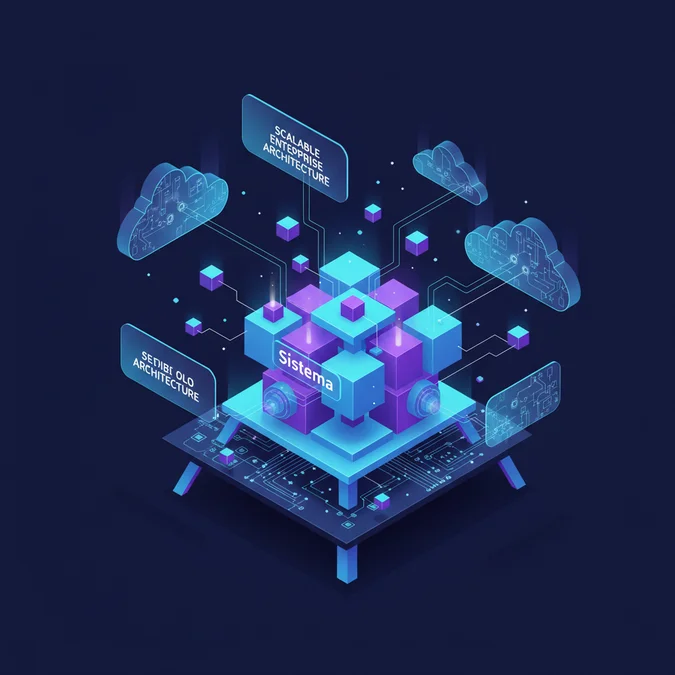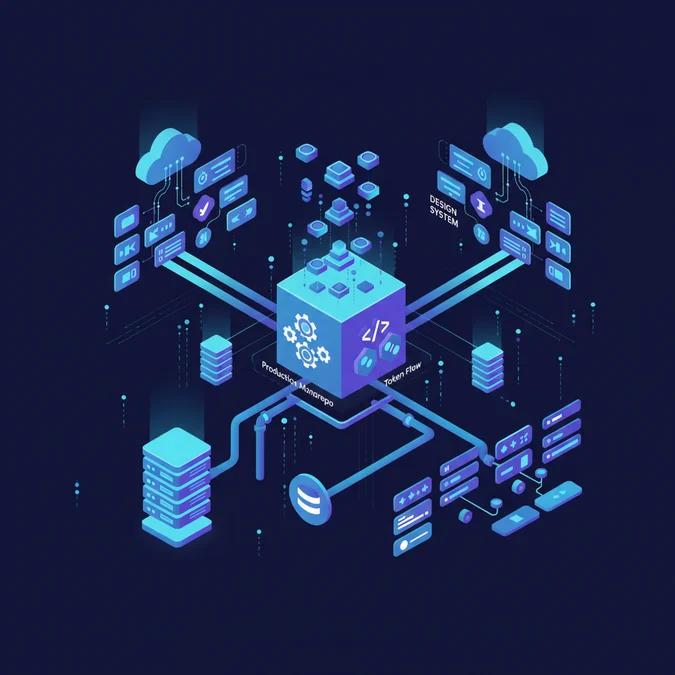

A design system agency is a specialized technical partner that engineers cross-platform design token pipelines, accessible headless component monorepos, and automated governance workflows across fragmented product suites. Rather than merely handing over static Figma sticker sheets, an elite agency bridges design and software delivery by shipping deterministic code packages that slash duplicated feature engineering across distributed web, iOS, and Android applications.
Most enterprise design system initiatives collapse not from lack of visual polish, but from technical debt: uncoordinated breaking releases, hardcoded CSS values drifting across product teams, and zero automation between Figma Variables and downstream codebases. When platform teams attempt to bootstrap this infrastructure from scratch while simultaneously supporting feature roadmaps, the result is often a brittle, half-finished internal library abandoned within 18 months.
For engineering directors and CTOs in 2026, engaging external specialists requires looking past flashy portfolio screenshots. Evaluating an agency demands an uncompromising technical audit of their monorepo architecture, token transformation pipelines, WCAG 2.2 AA automation, and post-handover governance models to guarantee long-term operational velocity.
Core Technical Deliverables of a Modern Design System Agency
Enterprise engineering organizations no longer pay external vendors for isolated UI asset kits. A modern design system agency must operate as an infrastructure and platform engineering group. The deliverables must cleanly decouple design semantics from runtime styling, automate versioned distributions, and provide robust developer experience (DX) tooling that guarantees near-zero integration friction.
+-----------------------------------------------------------------------------+
| Figma Variables & Tokens |
| (Global Primitives -> Semantic Roles -> Overrides) |
+-----------------------------------------------------------------------------+
 |
 v [Tokens Studio / REST API Webhook]
+-----------------------------------------------------------------------------+
| Style Dictionary Transform Engine |
| (JSON Parsing, Value Computation, Format Outputting) |
+-----------------------------------------------------------------------------+
 | | |
 v v v
+---------------+ +---------------+ +---------------+
| Web Target | | iOS Target | | Android Target|
| CSS Variables | | Swift UI / | | Jetpack |
| Tailwind Presets | Color Structs | | Compose Pack |
+---------------+ +---------------+ +---------------+
 | | |
 +------------------------------+------------------------------+
 |
 v
+-----------------------------------------------------------------------------+
| Core UI Monorepo (Turborepo / Changesets) |
| Headless Accessible Primitives (Radix / React Aria) + Typescript |
+-----------------------------------------------------------------------------+
An enterprise design system is not a UI component library; it is a distributed software delivery pipeline that synchronizes product design intent with multi-platform runtime environments.
When reviewing initial project statements of work (SOWs), technical stakeholders should evaluate the deliverables against a strict engineering scope checklist.
- Deterministic Token Architecture: Multi-tiered token structure (Global, Semantic, Component-level) managed in machine-readable JSON schemas conforming to the Design Tokens Community Group (DTCG) specification.
- Automated Transform Pipelines: Style Dictionary integration executing via GitHub Actions on every pull request, compiling tokens into CSS variables, SCSS maps, Tailwind presets, Swift structures, and Android Jetpack Compose resource objects.
- Accessible Headless Component Primitives: Production-ready, zero-runtime or low-runtime styling engines coupled to unstyled, fully accessible primitives (such as Radix UI, Base UI, or React Aria) supporting WAI-ARIA 1.2 patterns out of the box.
- Monorepo and Package Distribution Setup: Monorepo workspaces managed via Turborepo or Nx, utilizing automated release engines (such as Changesets) to manage semantic versioning, automated changelogs, and targeted private npm registry publishing.
- Automated Regression and Conformance Gates: Playwright-driven visual regression suites, axe-core accessibility linting, and custom ESLint rule packages that prevent product developers from bypassing token classes with raw hardcoded values.
Technical Architecture: Multi-Brand Tokens, Style Dictionary, and CI/CD
Enterprise scale requires operating across multiple business units, distinct visual brand identities, and divergent target platforms. An agency must build an architecture capable of swapping visual themes at compile time or runtime without rewriting component logic.
This is accomplished through a multi-tier token schema: global primitive tokens describe raw design decisions (e.g. palette-blue-500: #0284c7), semantic tokens map those primitives to context-aware roles (e.g. color-brand-primary: {palette-blue-500}), and component tokens isolate individual widget states (e.g. button-primary-bg-hover: {color-brand-primary}). Below is a production-grade Style Dictionary configuration demonstrating how an agency should configure cross-platform builds across Web, iOS, and Android targets.
// style-dictionary.config.ts
import type { Config } from 'style-dictionary'
import StyleDictionary from 'style-dictionary'

StyleDictionary.registerTransform({
 name: 'size/pxToRem'
 type: 'value'
 matcher: (token) => token.attributes?category === 'spacing' || token.attributes?category === 'font'
 transformer: (token) => {
 const val = parseFloat(token.value);
 return isNaN(val)? token.value: `${val / 16}rem`;
 }
});

const config: Config = {
 source: ['tokens/global/**/*.json' 'tokens/brands/brand-a/**/*.json'],
 platforms: {
 css: {
 transformGroup: 'css'
 transforms: ['attribute/cti' 'name/cti/kebab' 'size/pxToRem'],
 buildPath: 'dist/web/'
 files: [{
 destination: 'variables.css'
 format: 'css/variables'
 options: { outputReferences: true }
 }]
 },
 ios: {
 transformGroup: 'swift'
 buildPath: 'dist/ios/'
 files: [{
 destination: 'Tokens.swift'
 format: 'ios-swift/class.swift'
 className: 'BrandATokens'
 }]
 },
 compose: {
 transformGroup: 'compose'
 buildPath: 'dist/android/'
 files: [{
 destination: 'Tokens.kt'
 format: 'compose/object'
 className: 'BrandATokens'
 packageName: 'com.enterprise.tokens.branda'
 }]
 }
 }
};

export default config;
Multi-brand and multi-platform compilation introduces varying compilation latencies, file footprint trade-offs, and runtime dependencies. The agency must present a clear engineering comparison of output formats.
| Platform / Format | Transformation Latency (10k Tokens) | Bundle Footprint | Runtime Overhead | Primary Failure Mode |
|---|---|---|---|---|
| Web CSS Custom Properties | ~1.2 seconds | 14 KB (gzipped) | Zero (Native engine resolution) | CSS specificity collisions in legacy SPAs |
| Web Tailwind CSS Config | ~0.8 seconds | Generated utility maps | Zero (Compile-time purge) | Class name bloat without automated tree-shaking |
| iOS Swift Structs | ~2.4 seconds | 38 KB compiled binary | Zero (Compile-time evaluated) | Type mismatch when casting JSON color spaces |
| Android Jetpack Compose | ~2.6 seconds | 42 KB bytecode | Negligible (Memory heap alloc) | Theme recomposition thrash if instances are unstable |
How to Vet Agencies That Develop Comprehensive Design Systems for Large Projects
Procurement teams often rely on visual portfolios, client logos, and case studies when selecting partners. However, technical directors evaluating agencies that develop comprehensive design systems for large projects require a rigorous code-level vetting rubric. Surface-level UI agencies regularly deliver high-fidelity React component repositories that quickly break down under enterprise constraints: legacy monorepo friction, strict accessibility mandates, micro-frontend dependencies, and strict bundle size budgets.
| Evaluation Criterion | Standard Agency Answer (Red Flag) | Elite Agency Answer (Green Flag) | Technical Verification Test |
|---|---|---|---|
| Design-to-Code Pipeline | Manual export from Figma to developer tickets via story cards | Automated CI webhook converting Figma Variables to DTCG JSON and triggering Style Dictionary PRs | Audit their GitHub Actions workflow running automated token synchronization |
| Component Architecture | Built with custom CSS, SCSS modules, or tightly coupled styled-components | Built on unstyled, accessible primitives (Radix, React Aria) styled with utility engines | Check WCAG keyboard trap handling and screen reader tests on interactive components |
| Package Versioning | Single global version bump across the entire library via manual tags | Lerna, Changesets, or Nx monorepo with independent semantic versioning and release tags | Inspect their private npm packaging strategy and breaking change migration paths |
| Adoption & Enforcement | Publishing Storybook documentation and hosting monthly review webinars | Custom ESLint AST rules flagging raw CSS and deprecated components during continuous integration | Review an internal ESLint plugin package they have deployed to enterprise clients |
| Multi-Brand Scale | Separate repositories or duplicate Figma components for each brand | Single source token schema with dynamic theme overrides using CSS variables or runtime contexts | Request an architecture demo demonstrating dynamic brand switching with zero layout shift |
To thoroughly vet an agency, engineering leaders must execute a multi-step live technical verification before awarding an engagement contract.
- Request an Architectural RFC: Ask the agency to produce a three-page Request for Comments (RFC) outlining their recommended technical stack for your specific constraints (e.g. Next.js App Router, React Native cross-compilation, Micro-frontends).
- Inspect Real-World Code Repositories: Request an obfuscated or open-source monorepo codebase authored by their lead engineers. Look for unit test coverage, automated accessibility tests, and clean component interfaces without prop bloat.
- Verify Contributor Seniority: Ensure that the engineers pitching the architectural strategy are the practitioners actually writing code, rather than high-level strategists delegating execution to junior sub-contractors.
- Run a Token Integration Spike: Provide candidate vendors with a messy 50-variable visual inventory. Require them to model the semantic token hierarchy and output production CSS, iOS, and Android definitions within 48 hours.
In-House Engineering vs Outsourced Agency: Total Cost, Velocity, and ROI
When deciding whether to allocate internal engineering headcount or partner with a specialized agency, engineering leadership must model total cost of ownership (TCO) across hiring costs, delivery timelines, opportunity costs, and long-term maintenance. Attempting to build an enterprise-grade platform team internally from scratch often introduces high organizational latency before a single usable component reaches production.
| Operational Dimension | In-House Platform Team (4 Engineers + 1 Designer) | Specialized Design System Agency (Turnkey Squad) | Hybrid Model (Agency Foundations + Internal Handover) |
|---|---|---|---|
| Time-to-Production (MVP Primitives) | 8 to 12 months | 3 to 5 months | 4 to 6 months |
| Monthly Burn / Direct Cost | High ongoing salary, benefits, and tooling overhead | Fixed capital project expenditure across 4 to 6 months | Capped agency investment transitioned to a lean internal team |
| Opportunity Cost | Core revenue-generating product roadmaps lose senior talent | Zero friction on existing product engineering squads | Minimal internal diversion focused on architecture pairing |
| Technical Risk | High risk of architecture rework due to inexperience | Low risk: proven, battle-tested pipeline templates | Lowest risk: external speed coupled with internal context |
| Long-term Adoption Probability | Moderate: internal team may lack cross-departmental leverage | Low if handed over without internal champion alignment | High: internal squads pair directly during agency development |
Building an in-house design system without seasoned platform architects typically leads to multiple ground-up rewrites. Partnering with specialists compresses architectural validation from years into weeks.
The total return on investment is realized through developer velocity dividends. If an organization has 60 product engineers each spending four hours per sprint manually restyling form controls, debugging accessibility issues, and fixing cross-browser visual regressions, the organization wastes approximately 5,760 engineering hours annually. A well-engineered platform built by experienced practitioners eliminates this recurring friction, allowing product teams to ship validated user-facing features significantly faster.
Governance, Semantic Versioning, and Post-Handover Adoption Workflows
The lifecycle of an enterprise design system begins, rather than ends, at initial deployment. Without rigorous governance mechanics and automated developer tooling, product engineers inevitably bypass established primitives, causing codebases to drift. Elite design system agencies institutionalize automated gates, formal contribution paths, and programmatic enforcement mechanisms before concluding their engagement.
To stop hardcoded values from entering production code, the agency must deliver custom AST-based linting rules. The following ESLint rule demonstrates how automated linting catches hardcoded CSS hex codes and forces developers to use semantic tokens instead.
// eslint-rules/enforce-design-tokens.js
module.exports = {
 meta: {
 type: 'problem'
 docs: {
 description: 'Enforce usage of semantic design tokens instead of hardcoded hex values'
 category: 'Design System Enforcement'
 recommended: true,
 },
 fixable: 'code'
 schema: [],
 },
 create(context) {
 const HEX_REGEX = /^#([A-Fa-f0-9]{6}|[A-Fa-f0-9]{3})$/;
 return {
 JSXAttribute(node) {
 if (node.name.name === 'style' && node.value?expression?type === 'ObjectExpression') {
 node.value.expression.properties.forEach((prop) => {
 if (prop.value?type === 'Literal' && typeof prop.value.value === 'string') {
 if (HEX_REGEX.test(prop.value.value)) {
 context.report({
 node: prop.value,
 message: `Avoid hardcoded hex color '${prop.value.value}' Use a semantic design token var(--color-*) instead.`,
 });
 }
 }
 });
 }
 },
 };
 },
};
Post-handover maintenance requires a systematic adoption and contribution pipeline established by the agency during delivery.
- The RFC Contribution Protocol: Any team requesting a new component primitive or token modification must author a standardized RFC detailing user need, accessibility trade-offs, and API structure before opening a pull request.
- Automated Visual and Accessibility CI Gates: Pull requests to the core library run parallel GitHub Actions workflows testing zero visual regressions via Playwright and verifying zero automated WCAG violations using axe-core.
- Semantic Versioning with Changesets: Every library update requires a markdown changeset categorizing the change as patch, minor, or major. Breaking changes require automated codemods (using jscodeshift) to upgrade consumer repositories automatically.
- Dependency Tracking Telemetry: Automated repository scanning (via custom AST tooling or dependency graphs) continuously tracks token and component adoption rates across internal engineering squads, reporting drift metrics directly to engineering leadership.
Factors That Affect Development Cost
- Target platform breadth (Web only vs. Web, React Native, Native iOS, Native Android)
- Multi-brand and dynamic theming requirements
- Total primitive and complex component scope
- Automated CI/CD integration and testing tooling complexity
- Level of cross-functional team training and change management required
Total costs depend primarily on target platform variety, multi-brand complexity, and whether headless component engineering is included alongside token infrastructure.
Frequently Asked Questions
What does a design system agency actually deliver?
A specialized design system agency delivers production-grade component libraries, multi-platform token pipelines, unified Figma foundations, automated CI/CD publishing workflows, and formal governance documentation. Their deliverables bridge product design and software engineering to accelerate cross-team development velocity and maintain consistency.
How do agencies that develop comprehensive design systems for large projects handle multi-brand scale?
Agencies that develop comprehensive design systems for large projects structure multi-tiered token hierarchies containing global, semantic, and component tokens. Using tools like Style Dictionary and automated monorepo pipelines, they generate theme-specific variables for React, iOS, Android, and web components from a single source of truth.
How long does an enterprise design system engagement typically take?
A typical enterprise engagement spans 16 to 24 weeks. This timeline includes initial UI inventory audits, establishing cross-functional design tokens, building accessible headless primitives, setting up CI/CD test pipelines, and onboarding engineering squads with documented contribution guidelines.
Should enterprise engineering teams build their design system in-house or hire an agency?
Organizations hire an agency when they need rapid foundation bootstrapping without pulling senior engineers off core roadmap initiatives. Once baseline architecture, tokens, and governance pipelines are active, organizations transition maintenance and ongoing feature contributions to an internal federated governance team.
Hiring a design system agency is an infrastructure investment that shapes an organization’s frontend development speed and brand consistency for years. By focusing your partner evaluation on token pipelines, accessible component architecture, and automated governance rather than aesthetic deliverables alone, engineering leadership can avoid costly ground-up rewrites and maintain high delivery velocity.
When speaking with prospective agencies, verify their monorepo pipelines, require architectural RFCs, and confirm that post-handover contribution workflows are deeply prioritized. A true platform partner will not simply ship an isolated UI library; they will establish an automated, scalable software foundation that empowers your engineering organization to ship better interfaces with continuous confidence.
Need Engineering Guidance for Your Production Stack?
Evaluate architecture trade-offs, scalability limits, and implementation feasibility with experienced systems engineers.