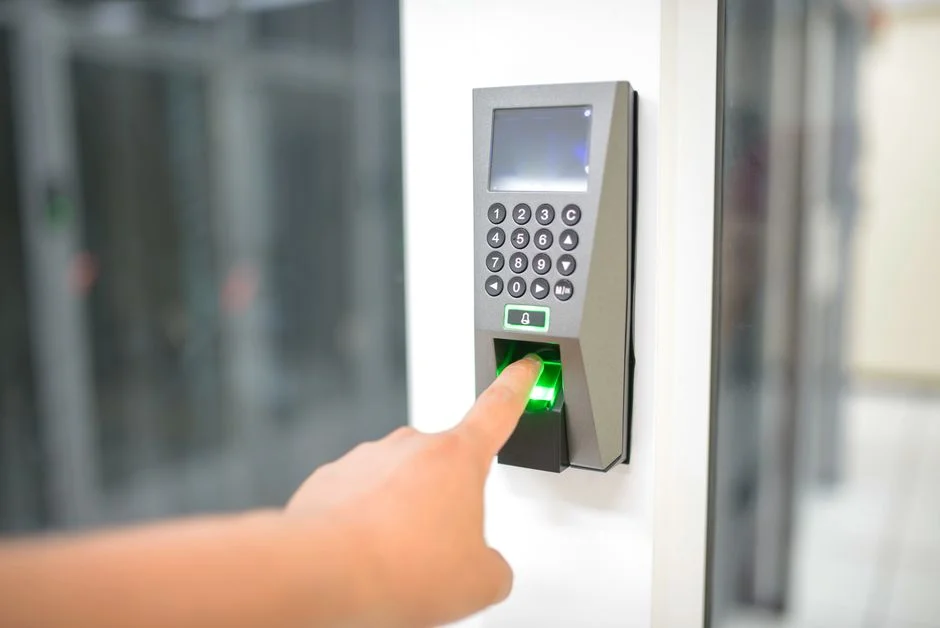

Why do financial technology companies persist in relying on SMS-based One-Time Passwords (OTP) when the industry has documented systemic vulnerabilities in Signaling System No. 7 (SS7) protocols for over a decade? As security engineers, we must move beyond the convenience-versus-security trade-off narrative and examine the cryptographic foundations of authentication mechanisms within high-risk financial environments.
Biometric authentication and OTP represent two fundamentally different threat models. While OTPs are susceptible to interception, social engineering, and man-in-the-middle (MITM) attacks, biometrics introduce persistent identity challenges related to data immutability. This article evaluates the technical implementation, attack vectors, and regulatory compliance landscape for both methods to determine the optimal integration path for modern fintech systems.
Cryptographic Foundations and Trust Models
OTP systems typically rely on shared secrets or time-based one-time passwords (TOTP) as defined in RFC 6238. The security of this model assumes the secrecy of the seed and the integrity of the delivery channel. However, in a fintech context, the delivery channel (SMS or email) is inherently insecure, as it is managed by third-party telecommunications providers who are not bound by the same security constraints as the financial application.
Conversely, biometric authentication operates on a local-match paradigm, often leveraging Trusted Execution Environments (TEEs) on mobile hardware. The biometric sample is processed by the device’s secure enclave, which releases a cryptographic token—signed by the device’s private key—to the server. This moves the trust from a transport layer (SMS) to an hardware-backed attestation model.
Vulnerability Analysis: Interception and Social Engineering
The primary flaw in SMS-based OTP is the lack of origin authentication. Attackers employ SIM swapping, where they convince a carrier to port a user’s number to a rogue device, effectively hijacking the OTP delivery mechanism. Furthermore, SS7 vulnerabilities allow sophisticated actors to intercept SMS traffic globally without physical device access.
Biometrics mitigate these network-level attacks but introduce new risks: Presentation Attacks (spoofing). A high-resolution photo or a synthetic mask can potentially deceive legacy 2D facial recognition systems. To secure a fintech application, developers must implement liveness detection—a suite of computer vision techniques that verify the user is physically present and not an image or video replay.
Regulatory Compliance and Data Sovereignty
Compliance frameworks such as PCI-DSS and GDPR impose strict requirements on how authentication data is handled. Storing biometric templates on a centralized server is a significant security liability; if the database is breached, the user’s biological data is compromised permanently. Unlike a password, a fingerprint cannot be rotated.
To comply with modern privacy standards, fintechs should adopt a decentralized model where the biometric template never leaves the user’s device. The application server only validates the signed attestation statement provided by the device’s secure enclave (e.g., Apple’s Secure Enclave or Android’s StrongBox). This approach aligns with the principle of data minimization, reducing the scope of audit requirements.
Latency and User Experience Trade-offs
The latency profile for authentication is critical for high-frequency trading or point-of-sale applications. OTP delivery is subject to network congestion, with delivery times often ranging from 3 to 15 seconds. This jitter results in a high drop-off rate during critical user journeys.
Biometric authentication is typically faster, as it relies on local hardware processing. However, system performance is dependent on the device’s sensor quality and the implementation of the biometric API. In low-light conditions or with older hardware, biometric failure rates can increase, necessitating a robust fallback mechanism. For fintech apps, the best practice is to treat biometrics as the primary factor and a hardware-bound TOTP app as the secondary factor.
Implementation Strategy: The Hardware-Backed Approach
When implementing biometric authentication, developers must interact with native APIs (BiometricPrompt on Android, LocalAuthentication on iOS) rather than relying on third-party cross-platform wrappers that may bypass security checks. A secure implementation should follow these steps:
- Key Generation: Generate a public/private key pair inside the TEE during the initial registration.
- Binding: Bind the private key to the biometric unlock event.
- Attestation: The server sends a challenge, which the device signs using the bound private key.
- Verification: The server verifies the signature using the stored public key, ensuring the device hardware has confirmed the user’s identity.
Scaling Challenges in Distributed Systems
Scaling OTP systems is straightforward but costly due to SMS gateway fees and carrier limitations. Scaling biometric authentication requires managing public keys for millions of users. Each user may have multiple devices, requiring a robust public key infrastructure (PKI) to manage key rotation and revocation.
If a user loses a device, the fintech application must have an out-of-band recovery process that does not rely on SMS. This usually involves pre-provisioned recovery codes or identity verification through a secondary, high-assurance channel, such as video-based KYC or hardware security keys (FIDO2/WebAuthn).
Integrating with CRM and User Lifecycle Management
Authentication events must be integrated into the CRM pipeline to track user behavior and security posture. When a user changes their device or updates their biometric settings, this should trigger an immediate security event in the CRM. This allows the system to flag suspicious behavior, such as a login attempt from a new hardware ID while an existing session is active elsewhere.
By treating authentication as a data point within the CRM ecosystem, companies can gain visibility into the security health of their user base. This integration ensures that authentication failures are not just logged in a backend file but are actionable events that influence risk scores and automated customer communication.
Final Verdict: The Hybrid Security Model
For fintech applications, the choice is rarely binary. Relying solely on biometrics ignores the need for recovery and fallback, while relying solely on OTP exposes the organization to systemic network-level risks. The most resilient architecture utilizes a multi-factor approach where biometrics handle the primary identity verification, and FIDO2-compliant hardware security keys or app-based TOTP handle secondary verification.
Fintech firms must prioritize the transition to FIDO2/WebAuthn standards, which offer the best of both worlds: biometric-like convenience with the cryptographic rigor of hardware-backed public key authentication. This approach effectively deprecates the use of SMS-based OTP, which should be relegated to a last-resort recovery method for legacy account access.
Frequently Asked Questions
What auth provider has the best biometric authentication support?
Providers that support the FIDO2 and WebAuthn standards generally offer the best support, as they allow for native device-level biometric integration without proprietary vendor lock-in.
What is the strongest authentication method?
The strongest method is currently hardware-backed phishing-resistant multi-factor authentication, such as FIDO2 security keys or device-bound passkeys.
Which technology is commonly used for biometric authentication?
Modern applications use native mobile APIs like BiometricPrompt on Android and LocalAuthentication on iOS to interface with the device’s secure hardware enclave.
Are biometrics no longer the safest way to authenticate yourself?
Biometrics are safe when implemented correctly as a local factor, but they are not infallible against sophisticated presentation attacks, which is why they should be paired with liveness detection and multi-factor requirements.
The security landscape for fintech is shifting toward hardware-backed identity verification. While biometric authentication significantly reduces the risk of credential theft compared to SMS-based OTP, its implementation requires careful attention to TEE integration, liveness detection, and secure key management. Security engineers must treat biometric data as sensitive, local-only assets and avoid centralized storage at all costs.
Moving forward, the adoption of FIDO2 and WebAuthn standards will bridge the gap between user experience and uncompromising security. By moving away from insecure legacy protocols like SMS, fintech applications can build a more resilient defense against modern social engineering and interception attacks.
Not Sure Which Direction to Take?
Book a 30-minute call with one of our engineers — we’ll help you decide without the sales pitch.