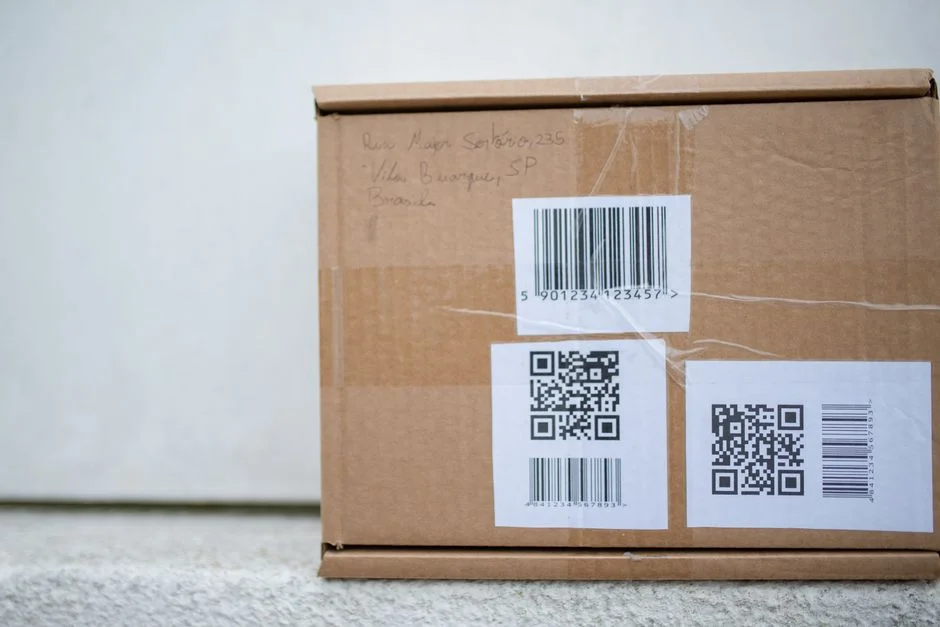

Why do organizations continue to rely on insecure, legacy inventory tracking protocols that expose sensitive supply chain data to trivial interception? As a security engineer, I frequently observe companies deploying barcode and QR inventory tracking systems with little regard for the underlying threat landscape. These systems are often treated as peripheral utilities rather than critical business infrastructure, leading to severe vulnerabilities that can compromise an entire organization’s data integrity.
An inventory management system is not merely a database of stock levels; it is a live, real-time map of your operational assets. When you implement QR or barcode scanning, you are establishing a continuous data ingestion pipeline. If this pipeline lacks rigorous authentication, encryption, and input validation, you are essentially providing an open door for unauthorized actors to manipulate your stock levels, siphon supply chain metadata, or pivot into your internal network. This article details the security architecture necessary to build or modernize a resilient inventory tracking system.
Threat Modeling for Inventory Scanning Architecture
Before writing a single line of code, we must conduct a formal threat model. In an inventory tracking ecosystem, the primary attack vector is the interaction between the physical scanner—often a mobile device or a handheld industrial unit—and your backend API. Attackers frequently look for insecure direct object references (IDOR) within the scan-to-database workflow. For instance, if an API endpoint accepts a `product_id` via a scan, it must verify that the user session has the explicit authority to update that specific record.
Consider the risks associated with man-in-the-middle (MITM) attacks during the transmission of scan results. If your mobile application transmits barcode data over unencrypted channels or uses weak TLS configurations, an attacker on the same network can intercept stock movement events. Furthermore, we must address the risk of injection attacks. QR codes are essentially structured strings; if your system parses these strings without rigorous sanitization, you risk SQL injection or cross-site scripting (XSS) if the scanner output is rendered in a web-based dashboard without proper encoding. Always adhere to the OWASP Top 10 guidelines, specifically focusing on software and data integrity failures.
Hardening the Data Ingestion Pipeline
The ingestion pipeline is where most systems fail. A barcode or QR code is an untrusted input. You must treat every scan as a potential malicious payload. At NR Tech Studio, we recommend a strict schema validation layer that rejects any input not matching the expected format (e.g., GS1 standards for barcodes). By using strict TypeScript interfaces in your backend, you ensure that the data structure remains consistent throughout the processing lifecycle, preventing type confusion vulnerabilities.
Furthermore, implement rate limiting and behavioral monitoring on your ingestion endpoints. If a single scanner device suddenly generates 5,000 requests per second, the system must trigger an automated lockout. This is not just about performance—it is about preventing automated scraping of your inventory data or denial-of-service (DoS) attacks against your supply chain visibility. Every scan event must be logged in an immutable, append-only audit log, ensuring that you can trace every stock movement to a specific user, timestamp, and device fingerprint.
Encryption and Data Privacy Requirements
Inventory data is often considered proprietary. If your system tracks items for high-value industries like healthcare or luxury retail, the data is a target. You must implement encryption at rest for your database and encryption in transit for all communications. Utilizing modern standards like AES-256 for storage and TLS 1.3 for transport is non-negotiable. Moreover, ensure that your database management practices include proper key rotation policies; if an encryption key is compromised, your entire inventory history could be exposed.
We also advise implementing field-level encryption for sensitive metadata. If a QR code contains serialized information that includes vendor pricing or internal serial numbers, that specific column should be encrypted using a separate, restricted access key. This limits the blast radius; even if an attacker gains read access to the database, they cannot extract meaningful insights from the encrypted fields without additional credentials.
Authentication and Identity Management
Relying on shared credentials for warehouse scanners is a common failure point. Each device and each operator must have a unique identity. We recommend using OAuth 2.0 with OpenID Connect for managing access to the inventory system. By implementing short-lived access tokens, you minimize the risk if a physical scanner is lost or stolen. The device should require re-authentication at defined intervals or based on high-risk triggers, such as shifting between different zones of a warehouse.
In addition to user authentication, device-level authentication is paramount. Use mutual TLS (mTLS) to ensure that only authorized hardware can communicate with your production API. If a device lacks the proper client certificate, the server should drop the connection immediately without providing any diagnostic information that could assist an attacker in reconnaissance. This creates a zero-trust architecture where the network location of the scanner is irrelevant to its authorization status.
Monitoring and Incident Response
Security monitoring is not a one-time setup; it is a continuous process. Your inventory system must emit logs to a centralized Security Information and Event Management (SIEM) system. Key metrics to monitor include failed authentication attempts, unauthorized access to sensitive API endpoints, and anomalous inventory adjustment patterns. For example, a sudden bulk decrement in stock levels that does not correlate with an outgoing order should trigger an immediate alert to your security operations center.
Establish a robust incident response plan specifically tailored for your inventory system. If you detect a breach, how do you isolate the compromised scanner? Do you have the capability to perform a remote wipe? These are questions that must be addressed during the architectural phase. Always maintain an offline backup of your inventory state, verified regularly for integrity, to ensure business continuity in the event of a ransomware attack targeting your primary database.
Cost Analysis of Secure Inventory Systems
Building a secure barcode and QR tracking system requires a significant investment in engineering time and infrastructure. Costs are driven by the complexity of the security stack, the number of integrations, and the audit requirements. Below is a breakdown of typical investment models for a custom-built solution.
| Model | Scope Focus | Typical Investment Range |
|---|---|---|
| MVP Security Hardening | Core API security, Auth, Basic Logging | Moderate project-based fee |
| Enterprise Integration | mTLS, SIEM integration, Role-based Access | High project-based fee |
| Ongoing Maintenance | Patching, Audit log analysis, Key rotation | Monthly retainer |
Note: A basic secure integration typically takes 120-200 hours of development time. Complex enterprise-grade systems with multi-site hardware synchronization can exceed 500 hours. The primary cost factors include the complexity of your current legacy data structures, the number of physical scanners to be provisioned, and the regulatory compliance requirements (e.g., HIPAA for medical inventory). Investing in secure architecture upfront is significantly cheaper than the legal and operational costs of a data breach.
Legacy System Migration Risks
Migrating from an insecure legacy barcode system to a modern, secure architecture is fraught with danger. The primary risk is the migration of ‘dirty’ data—including hardcoded credentials, cleartext passwords, or unvalidated data formats—into the new system. You must treat the migration process as an opportunity to sanitize your entire dataset. Do not simply lift and shift; evaluate every data point for its security implications.
Ensure that the legacy system is decommissioned completely once the new system is live. Often, orphaned legacy databases remain active and exposed, providing an easy entry point for attackers who know the old infrastructure’s weaknesses. We emphasize the use of automated migration scripts that validate every record against your new, stricter schema definitions, rejecting any data that violates your new security policies.
The Role of Cloud-Native Security
Modern inventory systems should leverage cloud-native security features to augment their defensive posture. Using managed services like AWS Secrets Manager or HashiCorp Vault to handle your API keys and database credentials ensures that sensitive information is never hardcoded in your application source code. Additionally, utilizing container security scanning in your CI/CD pipeline prevents vulnerable dependencies from ever reaching your production environment.
By adopting a serverless or containerized architecture, you can enforce strict network segmentation. For instance, your inventory database should exist in a private subnet, accessible only by your application server and never directly from the public internet. This layer of abstraction, combined with robust IAM policies, provides a significant barrier against unauthorized access, even if a specific application component is compromised.
Our Commitment to Secure Development
At NR Tech Studio, we prioritize security as the foundation of every project. Whether you are building a new system from the ground up or modernizing an existing one, our approach centers on defensive programming and rigorous testing. We understand that for your business, inventory accuracy is the backbone of your revenue stream. We provide comprehensive audits, secure API development, and infrastructure hardening to ensure that your data remains protected.
Explore our complete Software Development directory for more guides. If you are struggling with an outdated, vulnerable system, our team specializes in secure migration and modernization services. We can help you transition to a resilient, scalable architecture that protects your assets and your reputation. Contact us today to discuss your migration needs.
Factors That Affect Development Cost
- Project complexity
- Number of integrations
- Regulatory compliance requirements
- Legacy data sanitization needs
- Hardware scanner device count
Development costs vary significantly based on the level of security hardening, compliance requirements, and the complexity of existing legacy data migration.
Securing a barcode and QR inventory tracking system is not a project that ends at deployment. It requires a commitment to constant vigilance, regular security audits, and the adoption of a zero-trust mindset. By addressing threats at the architectural level, hardening your ingestion pipelines, and implementing robust identity management, you can build a system that supports your business growth without compromising your security posture.
Do not wait for a security incident to evaluate the integrity of your supply chain data. Reach out to NR Tech Studio for a consultation on how to migrate your legacy inventory systems to a modern, secure, and resilient platform.
NR Tech Studio builds custom web apps, mobile apps, SaaS platforms, and internal tools for growing businesses. If you’re working through a technical decision, feel free to reach out — no commitment required.